The two second stretch is replacing the old method of stretching. Muscle fibers contract when a stretch is held for thirty seconds. If your target muscle contracts while you are stretching it, then you are not achieving the desired goal. Holding a stretch for just two seconds prevents the stretch reflex from kicking in. The new approach of two second stretching is a fundamental element of Active Isolated Stretching. 30 second stretching is part of the old method of stretching. Old stretching is the tried and failed method. AIS stretching is the optimized method of stretching. Active Isolated Stretching (AIS) promotes a repetition pattern of stretching where the stretch is held for two seconds. The stretching method you choose will only reflect the effectiveness of that type of stretching. If you chose traditional stretching you will emphatically be able to claim that conventional stretching is not working, but if you chose Active Isolated Stretching you will understand that new stretching techniques are essential for repairing physical pain, preventing injuries, and preparing for athletic activities.
How long should I hold a stretch?
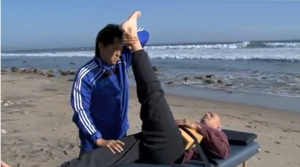 The conventional form of stretch and hold for thirty seconds is what everyone knows. The problem with holding a stretch for thirty seconds (or ten seconds) is that an automatic stretch reflex will kick in after two seconds which prevents the target muscle from lengthening. When you hold a stretch for thirty seconds, the automatic stretch reflex prevents the target muscle from lengthening to its potential.
Considering this fact, Active Isolated Stretching uses a two second stretch. Rather than holding one long time, AIS emphasizes holding a stretch for two seconds and doing 6 to 8 repetitions to the same target muscle. Each repetition goes slightly more than the previous rep. Always holding for a maximum of two seconds and only increasing the stretch two or three degrees more than the previous repetition. The increase in the stretch is gradual. If you consistently increase the range of motion one to three degrees through each rep, than in a series of repetitions you can increase the range of motion twenty percent from its original state.
AIS stretching avoids maximum effort because overloading the stretch can cause microtears to a target muscle. Gentle and gradual opening is part of the AIS method.
When we lift weights for strength training, we do repetitions to get the maximum benefit to the target muscle. Similarly, AIS states that a repetition pattern to stretching will be most beneficial to lengthen target muscles. The old style of stretching was ineffective. When we hold the stretch for thirty seconds we are beating up our muscles. Too much strain on the muscle tissue will lead to counter-productive results. The two second stretch is one of the defining principles of Active Isolated Stretching. Learn the AIS method to get the most benefit from your body.


To Jeff B,
Yes, AIS treatment will help your cervical arthritis and your occipital headaches. Did you have surgery?
would ais stretching help my c1-c2 cervical arthritis which causes occipital headaches just had c6 cervical replacement prodick but still very stiff in the trapezius muscles.
Hi Jeff B.
AIS therapy is highly beneficial for cervical arthritis. The stiffness in your trapezius muscles is definitely contributing to the occipital headaches. I’m sure there are a number of other muscles that are also playing a role in your pain patterns. The excess tightness in your upper back and neck muscles are causing pain patterns to trigger the occipital headaches. Once you start the sessions, you and the therapist will be able to accurately identify the muscles that need to be lengthened using the AIS system.
Anthony Ohm